
You open your door on a Tuesday afternoon, and there it is: another cardboard box sitting on your porch. You pause for a second, genuinely trying to remember what you ordered three days ago at 1:00 AM. As you tear open the tape, a sudden wave of guilt hits your chest. You didn’t actually need this. You couldn’t really afford it. And yet, in the moment you clicked “Buy Now,” it felt like the most important purchase in the world.
If this scenario sounds painfully familiar, please take a deep breath: you are not broken, lazy, or bad with money. What you are experiencing is the direct result of a brain wired differently for dopamine regulation, executive function, and impulse control.
Impulsive spending in neurodivergent adults is rarely about a lack of intelligence or discipline. It is a biological drive for stimulation, emotional regulation, and relief from mental paralysis. Once you understand the underlying neuroscience, you can stop fighting your brain and start building low-friction systems that actually protect your bank account.
Why Traditional Budgets & Financial Advice Fail ADHD Brains
If you have spent years trying to follow standard personal finance advice only to abandon it after a week, there is a good reason for it. Traditional financial advice was designed for neurotypical brains that process dopamine and long-term planning very differently.

Here is why typical budgeting advice fails adults with ADHD:
1. High-Friction Tracking Causes Executive Dysfunction
Most budgeting methods require you to manually log every receipt, categorize transactions into dozens of folders, or update complex spreadsheets weekly. For an ADHD brain already suffering from executive dysfunction, this high cognitive load leads straight to overwhelming mental paralysis. The moment tracking feels like a tedious chore, your brain abandons it entirely.
2. Strict Restrictions Trigger Pain & Rebellion
Standard budgets rely on artificial scarcity and extreme restriction (“never buy coffee outside,” “zero spending on hobbies”). To an ADHD brain starving for dopamine, sudden restriction feels like emotional punishment. This inevitably triggers a “rebellion effect,” where your brain demands relief—leading to an even bigger shopping spree later.
3. Delayed Rewards Do Not Stimulate Dopamine
Neurotypical budgeting relies on the satisfaction of watching a savings balance grow over six months. However, the ADHD brain operates on two primary time zones: “Now” and “Not Now.” Future savings feel theoretical and distant, while the shiny item in your online cart offers a guaranteed, immediate hit of dopamine right now.
5 Low-Friction Systems to Stop ADHD Impulse Buying
Instead of forcing yourself to “try harder” with willpower you do not have, you need low-friction barriers that slow down the purchase process without causing emotional frustration. Here are five practical strategies tailored to the ADHD brain.

Strategy 1: Build a “Dopamine Wishlist” Buffer
The impulse to buy is often driven by the excitement of discovery rather than the desire to own the physical object. You can satisfy that immediate “seeking” urge without spending a single dollar by creating a dedicated buffer zone.
Set up a visual wishlist using an app like Pinterest, Notion, or even your phone’s bookmarks folder. When you feel the intense urge to purchase something non-essential, add it to your “Dopamine Wishlist” with the current date.
Give yourself a mandatory 72-hour cooling-off rule. Tell yourself, “I am not saying ‘no’ to this item; I am just putting it on hold until Friday.” Because you saved it, your brain feels reassured that the item isn’t lost. In over 70% of cases, once the initial dopamine spike fades after three days, you will completely forget why you wanted it in the first place.
Strategy 2: Increase Digital Friction at Online Checkouts
In today’s digital world, buying something takes less than three seconds. Autofill payment details and one-click purchasing are the ultimate enemies of ADHD financial health because they eliminate the gap between thought and action.
Take ten minutes today to deliberately add friction back into your digital environment:
Remove saved credit cards from Chrome, Safari, Amazon, and favorite online stores.
Delete shopping apps from your phone so you have to use a desktop browser instead.
Unsubscribe from store marketing emails that trigger sudden, flash-sale urgency.
Forcing yourself to physically stand up, find your wallet, pull out your credit card, and type in 16 digits creates a crucial 60-second window. That brief pause is often all your brain needs to break the automated buying loop.
Strategy 3: Implement the “Visual Cash” Method for High-Trigger Categories
Out of sight truly is out of mind for adults with ADHD. Digital money feels abstract and invisible, making it remarkably easy to tap a card or phone five times a day without registering the total impact.
For your biggest impulse categories—such as takeout meals, coffee shops, or target store runs—switch to physical cash or a separate prepaid spending card with a strict weekly limit.
Seeing the physical bills leave your hand or watching a prepaid balance drop provides immediate, sensory feedback. It turns abstract numbers into a real, physical boundary that your brain can process visually without complicated math.
Strategy 4: Calculate Purchases in “Focus Hours” Instead of Dollars
Prices on price tags are deliberately abstract. A $150 jacket does not sound alarming when you are chasing a quick mood boost. To make the true cost clear to your brain, translate price tags into your own labor and energy.
Calculate your net hourly wage (after taxes). If you earn $20 an hour net, ask yourself: “Is this item worth 7.5 hours of my focused work, energy, and executive function?”
When you convert price tags into the real time and mental effort it takes to earn that money, the cost suddenly feels real. It reframes spending from an easy tap of a button into a conscious trade-off of your personal time and energy.
Strategy 5: Create a Curated “Dopamine Menu”
We often shop impulsively not because we want stuff, but because we are bored, stressed, under-stimulated, or seeking an escape from a daunting task. Shopping becomes a quick, accessible coping mechanism for emotional regulation.
Create a written “Dopamine Menu” of non-shopping activities categorized by energy level:
Appetizers (5 minutes): Put on a favorite high-energy song, do a quick physical stretch, drink a cold glass of water, or step outside into sunlight.
Mains (20–30 minutes): Take a hot shower, play with a pet, do a quick brain-dump journal entry, or go for a brisk walk around the block.
Desserts (Splurges): Watch an episode of a comforting TV show or spend time on a favorite hands-on hobby.
When you feel the sudden urge to browse online stores, check your menu first and choose a zero-cost dopamine hit to satisfy your brain’s biological request for stimulation.
Take the Next Step: Free Impulse Pause Sheet
Breaking deep-seated financial habits takes time, and you don’t have to rely on memory when executive dysfunction kicks in. Having a physical, low-friction tool right next to your desk can make all the difference.
We designed a simple, printer-friendly Impulse Pause Sheet specifically for adults with ADHD. It guides you through a gentle, 60-second mental check-in right before you hit “Buy Now”—helping you identify emotional triggers and pause without feeling shame.

[Download the free Impulse Pause Sheet (US Letter & A4) here]
Ready for a Complete Financial Reset?
While a quick printable sheet is fantastic for handling acute buying urges in the moment, long-term freedom comes from updating your underlying money mindset and building an environment where staying on track feels effortless.
If you are ready to build a comprehensive, dopamine-friendly financial system that works with your neurodivergent brain, take the next step with our complete guidebook:
“Master Your Money Mindset & Stop ADHD Impulsive Spending for Good”
Inside this step-by-step digital guide, you will discover:
The Neuro-Financial Reset: How to heal from years of money shame and financial paralysis.
Dopamine-Driven Budgeting: A simple, low-maintenance framework that takes less than 15 minutes a month to keep running.
Environment Design: How to structure your phone, bank accounts, and living space to prevent spending triggers automatically.
Long-Term Wealth for ADHDers: Practical ways to build savings and investments without getting bored or overwhelmed.
Stop fighting your brain and start enjoying financial peace of mind today.
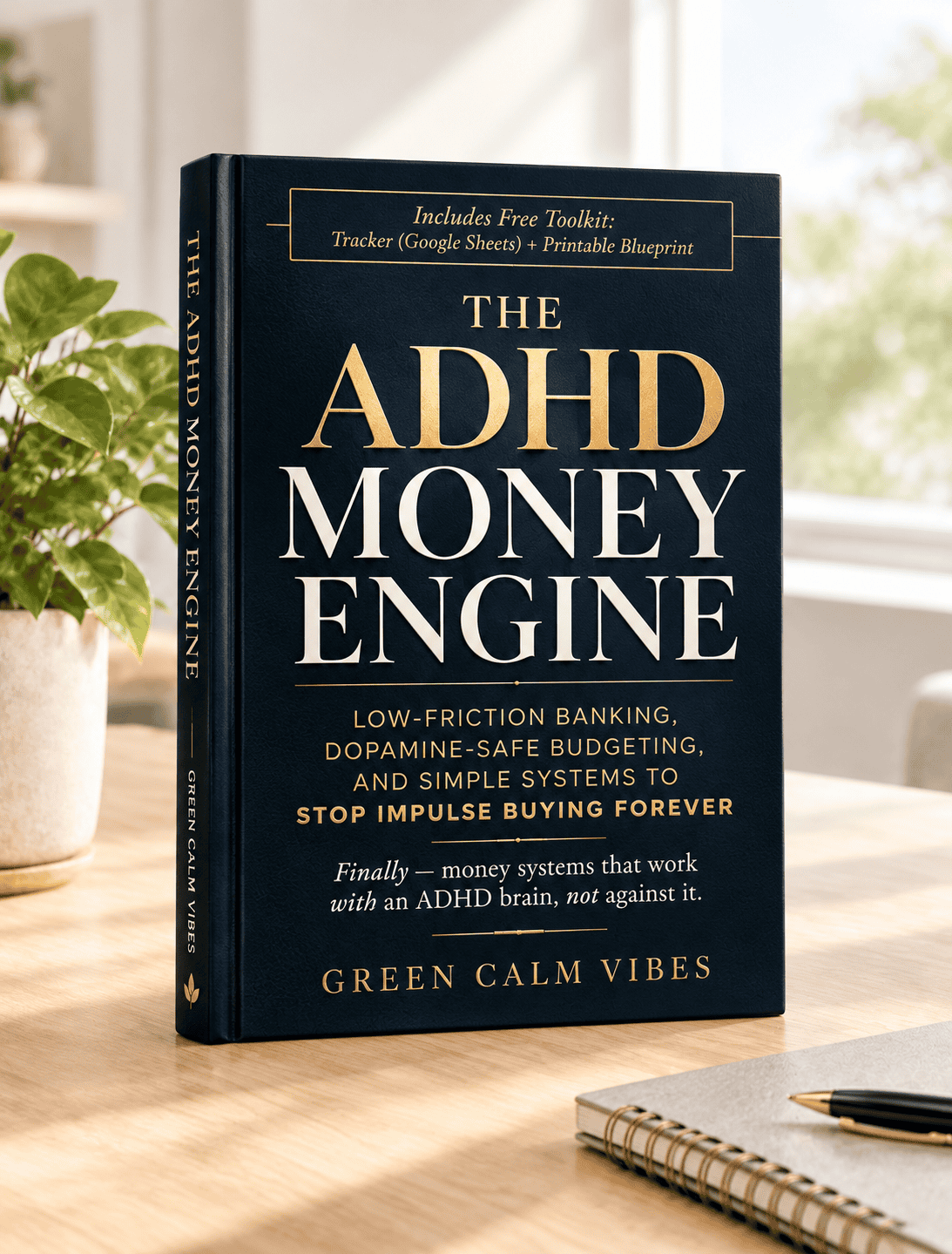
[Get the full guide on Google Play Books]
