Wellness workspace ideas are being given serious consideration in both corporate and home office settings. A greater emphasis on creating environments that promote comfort, focus and calm are clearly increasing in value. A wellness-sensitive corporate office decreases stress and creates conditions for productivity to flourish naturally.
Nationally and globally, big (and small) companies such as Google and Microsoft are placing value on office layouts that support employee wellness and well-being are becoming the new standard for corporate offices globally. These workplaces showcase the ways thoughtfully designed spaces that support employee well-being and wellness enhances employee engagement.
Even those who work at home and have demonstrated their ability to manage their time, and create performance boundaries are just learning that a stress free home office actually helps enables boundaries on work and to feel good about their ability to maintain healthier routines.
There are quite a few design options that will provide a different mood and performance. Small details like comfortable seating, maximizing daylight, designing for low clutter not only encourages a quadrant of on a continuum of mindful based work through the course of the day; these details are fundamentally critical when you need to maintain your focus.
Unlike the commonly held notion that a wellness oriented workspace will involve expensive work space considerations, there are many restorative and wellness oriented workplace solutions that do not involve large sums. Many wellness workspace options are achievable, innovative and affordable alternatives to design or enhance work environments.
This paper is designed to provide readers with real life solutions, examples, and case studies, exploratory ways to enhance healthier work spaces that naturally foster focus, calm, and balance.
Wellness Workspace Ideas for Better Productivity
Designing the Optimal Environment
We consider ideas for a wellness workspace when considering the optimal environment for both productivity and sustenance. Companies are beginning to realize that the design of space greatly impacts energy, motivation, and focus.
A thoughtfully designed workspace not only helps employees or remote workers feel more confident, but also helps them thrive within the space.
The Importance of Natural Light
Employees in companies with higher amounts of sunlight, (i.e., more windows), while not suggesting cause and effect, had higher employee satisfaction and reported lower fatigue. Your house or apartment has windows. If your desk is by one, lift and turn your body to face it while working and expose yourself to that energy as much as possible.
Adding Plants for Wellness
When thinking about wellness workspace, adding plants is an easy improvement. Plants filter air and help to reduce stress and improve cognitive performance.
Companies like Amazon embrace biophilic design principles, creating elements of nature in their workspace, as positive measurable effects in team are documented. Having plants on your desk space at home provides you with the same psychological comfort and decreases stress.
Building a Stress Free Home Office
Separation of Spaces
Remote workers often find that their productivity suffers when home makes its way into their work, so separated spaces more effectively create the needed separation.
Designating one location for work provides a clearer mental state. Relatively small areas, such as a small corner or workbench, provide structure and narrow distractions. Boundaries created by a designated location lessen stress and decrease the thought that you are constantly working.
Ergonomic Furniture
Much of the stress people experience with remote work is due to the type of furniture they use. Ergonomic chairs support your posture and lessen stress on the back as well as enhance the ability to remain comfortable during long intervals of use.
Ergonomic desks support limb position and position with sitting on an adjustable desk supports movement (i.e., standing and sitting desk option). Most studies suggest that working within an ergonomically correct position supports more focus while leading to less strain related health complaints over time.
Decluttered and Organized Space
Decluttered space also supports mental clarity. An organized desk with clear cords and organized storage systems can create a calmer surrounding.
Simple surroundings can lessen feelings of overwhelm while promoting more self-focus. Applying all of these principles allows workers to create a stress-free home office, where balance is encouraged without added mental burden.
The next section highlights principles related to mindful work habits for resilience when working with repeated stressors.
Practicing Mindful Work Habits
Research from the American Psychological Association states that practicing these mindful ways of work don’t just improve focus – it also helps lower work-related stress.
Small Rituals for Energy
Over time, these enacted, small rituals become a better means of engaging with adversity. As you begin to develop your balanced integration of life, a conscious shift will occur.
Designing a Healthy Lifestyle Workspace
Healthy nutrition options also encourage well-being in the office setting. Offices that provide fruits, and nuts in all varieties, and water are created to support better healthy choices for their workforce. Employees working in home offices benefit from having nutritious options visible and accessible (and not all in private pantries and cupboards).
Hydration stations, tip jars, even in offices at home can improve productivity and reduce sluggishness with just plain water.
Designing for Movement
Designing for movement through layouts establishes patterns and ongoing activity in a workspace. Walking paths, stretching corners, and even a fitness room (Office Workouts) allow for a break, and are all features contribute to promoting professional spaces and healthy lifestyle workspaces work together.
Changing features in a workspace strengthens both the body, and the mind. The next part focuses on hacks that can lead to productivity in office settings that promote efficiency and streamlining.
Productive Environment Hacks for Everyday Efficiency
Productive environmental hacks are all about reducing the labour in a stated routine while increasing professional efficiency without overworking yourself. Influence the clarity and reduction of distractions will help us become much more effective daily.
Constructive hacks to improve your productivity:
- Time-Block: Breaking tasks into blocked time helps minimize evasion tactics while garnering attention to ignore distractions.As mentioned in high profile outlets and publications by experts like Cal Newport, the idea of deep work is essential for sustainability.Many professionals adopt a chronologically structured calendar of tasks to balance and adhere to work demand.
- Productivity Tools: Technology that can help keep you organized can change the shift on your organization stance.Tasks warehoused in productivity processes like Trello, Asana, and Notion creates accountability in task resolution.These processes primarily reduce unnecessary cognitive load in the mind while establishing processes to allow work to embolden work to develop.
- Noise Control: Reducing noise and interruption reduces lack of focus and attention.Many use noise-cancelling headphones or cradle white-noise applications for reducing noise, and limiting interruptions alters perception of employee calm space.More distinct, calmer, less distractions are naturally formed, providing higher demands of attention, through more energy used as we progress through the day.
With a little attention and thought put into environmental hacks, we will find our work most productive, and less stressful to complete on a daily basis. From here will think, blend, and meld these hacks for better use in the workplace contextually speaking.
Combining Wellness Workspace Ideas with Modern Office Design
Wellness workspace ideas are becoming a significant focus of contemporary office design, promoting the idea that health and productivity go hand in hand. Companies are rapidly discovering that when they offer health and wellness focused spaces, they encourage employees to feel more engaged at work and promotes retention. Thoughtful workspace design creates a feeling of comfort, value and motivation amongst workers every day.
Here’s how wellness workspace ideas are reshaping the way we work:
- Biophilic Design: This design choice exemplifies how nature in the workplace positively affects workplace culture. Employees working in biophilic environments feel enhanced focus and improved morale.
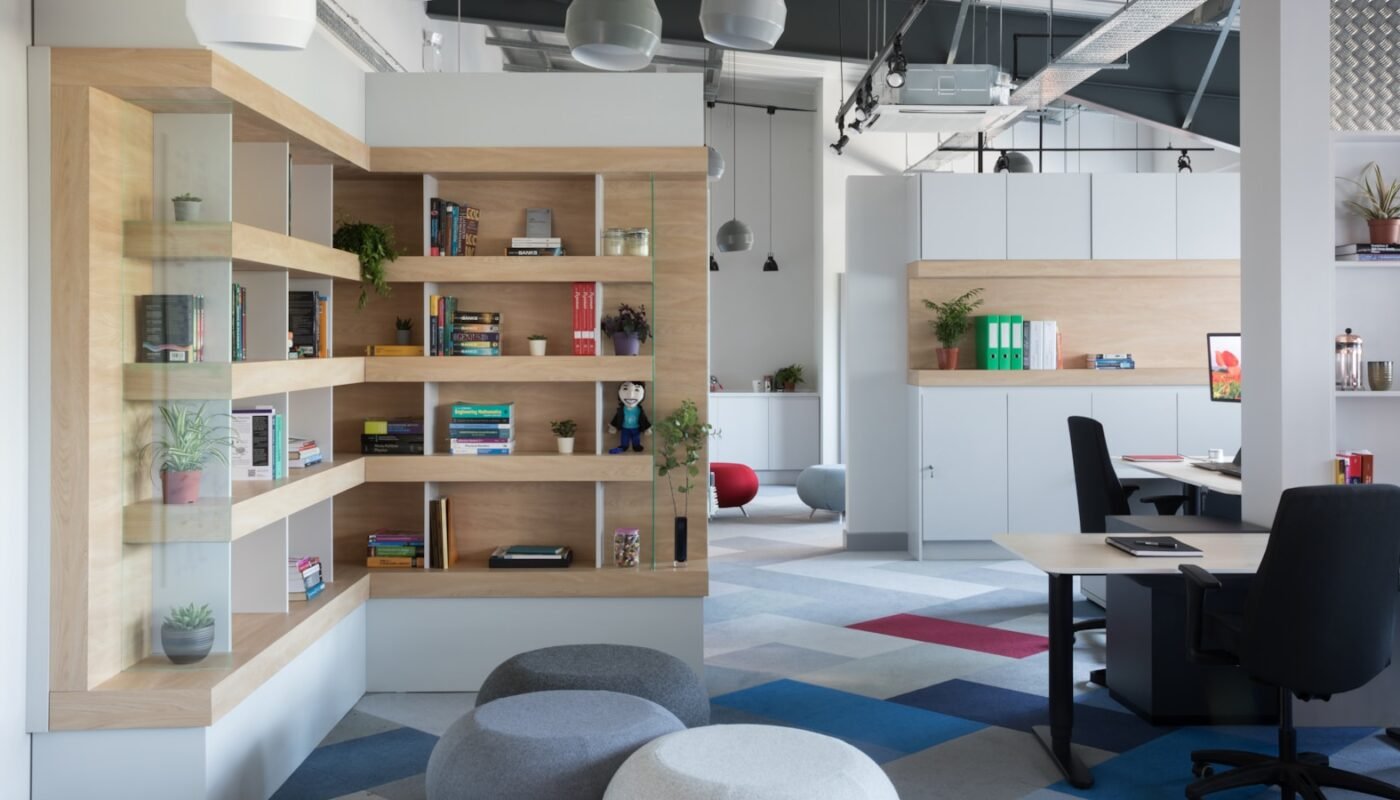
- Collaborative Zones: Modern offices are more likely to center their design concept around creating shared spaces where employees can interact and work together.Collaborative area features include flexible furniture, modular seating, and open layouts. After all, the point is to provide employees with the flexibility of working in a private space, or a public space while still being comfortable.As collaborative zones encourage teamwork and brainstorming, they also immediately remove workplace stress and promote creativity and innovation. This dispels the myth that employee wellness and workplace functionality must be separate, as it is evident through demonstrating these areas complement one another.
- Quiet Rooms: Of equally importance as collaborative areas is a space for employees to privately recharge.Quiet rooms allow an employee a break from the demands of the office environment, or simply a productive workplace “silence.”These spaces provide an employee the opportunity to feel refreshed which creates a productive work environment, but also enhances employees clarity and mental capacity when returning to their work.
When integrated together, physical workspaces that include collaborative zones, quiet rooms, and biophilic design lend to creating an equitable and supportive workplace.
Stress Free Home Office on a Budget
Here are tips to create a budget-friendly, stress-free home office:
- DIY Organization: You don’t need to invest in high-end storage options to organize your office space.
- Affordable Lighting: Lighting is extremely important to creating a vibe and building your energy. Purchasing LED desk lamps with adjustable brightness is a quick fix and cost effective option to find the right light for you.Better light can help with focus and keeping your energy up throughout the day.
You can create a stress-free home office on a budget.
Mindful Work Habits for Remote Professionals
The following mindful work habits can make a big difference to you, whether formally or informally:
- Routine Breaks: Breaks are important for maintaining energy levels when working long hours. Busting out some stretches, enjoying a short walk, completing neutral breathing, and quick proactive approaches are all action steps that merge well to get your energy flowing.Micro breaks are important because they actually improve efficiency and reduce “mental fatigue,” which ultimately makes working more productive.
- Establish Communication Boundaries: Notifications barrage us, as do endless meetings when working from home.It is important to mute the notifications that do not demand immediate response, and establish limits around meeting times.
Healthy Lifestyle Workspace in Corporate Settings
Support for Health at Work is a Priority
A healthy and energized lifestyle workspace is a high priority for many innovative organizations. They are realizing that wellness-based workplaces enhance camaraderie, loyalty, and productivity through the long term. This investment in employees’ health while at work is more than a trend, it has become a serious investment.
Here’s how many companies are on their way to a wellness based workplace:
Some like Google and Apple go further with onsite gyms, wellness workshops, and nutrition counseling.
- Nutrition Access: Healthy eating is one more aspect of a wellness-based workspace.
Simply providing fruits, lunch palatable options, and water stations outlines a wellness workspace.
Offices that provide typically light fruits, lunchtime water stations, and nutritious foods show employees that healthy food helps with energy soft crashes in employees from 2 pm – 5 pm.
By investing a bit of money you offer your employees the ability to work productively during lunch time, to allow this payoff to exponentially increase in greatly increased employee performance.
- Movement Designs: Providing a workplace that employs health can be as simple as providing a work area that encourages movement.
Many organizations employ features for movement, such as wide hallways for easier movement and stretching, cozy relaxation nooks to assess, and access to the stairs!
These designs help to create a workplace vitality for company, and to ensure that employees engage in a culture provided for companies.
Productive Environment Hacks for Team Collaboration
Productiveness can be dependent, often, on environment hacks that can drastically impact the way teams collaborate, whether they are working in person or remotely. A well-organized and structured environment simplifies processes and improves the results of many of the tasks as well as reduces stress levels.
Effective systems and thoughtful design help increase a teams’ ability to focus and collaborate together.
Here are ways to enhance collaboration through design and systems:
- Shared Digital Space: Communication tools – tools like Slack, Microsoft Teams, and Notion are critical to effective collaboration.
These shared platforms are not only critical for communication but also help to organize everything in one place so you do not forget conversations, tasks, action items, etc. More organized channels reduce confusion when needing to communicate with someone, while making sure it is all accessible in one space, which helps to reduce information overload.
In short, you apply the same logic to your overall management of your project, so you would apply the same logic to your teams communication with work assets. With a more organized setup, there is less confusion – and this results in speedier progress and efficiency with less problems along the way.
- Physical Collaboration Spaces: White boards, idea walls, and shared workstations instantly cause people to feel more a part of a team and engaged in their collaboration and/or project environment.
- Balanced Spaces for Collaboration & Quiet Spaces: Collaboration space is not synonymous with quiet work space – it is important that although we create spaces for team/collective work, we also create spaces for quiet work.
Quiet work is ideal for some employees, while collaborative work is preferred for others. Offering both space options for different purposes each workday, reduces some stress and enhances productivity because they can shift to the space they prefer.
The Future of Wellness-Friendly Offices
Research indicates that offices designed for wellness produce better business outcomes worldwide.
Here’s what to expect:
Technology for Wellness
Technology will be a huge contributor to workplace wellness.
With technology like smart desks, adjustable lighting, and air quality monitors that can adjust automatically to your preferences, there will be elements to help personalize comfort and they will also manage your health and safety risks.
The office of the future will embrace a balance between automation and human centered design to present a supporting and balanced environment.
Hybrid Work Models
Hybrid work is going to be a permanent fixture.
Companies are creating wellness supports for remote and in office employees. In this manner, employers will ensure everyone has equitable wellness support, regardless of location!
These wellness strategies will also offer flexibility between environments, to adapt.
Inclusivity in Design
Offices will also be designed from all functionalities to be inclusive of all.
There will be the opportunity to include spaces for neurodiversity, offering accessibility, and emerging wellness practices related to cultural wellness.
Employers will view the office as a wellness-friendly environment with the expectation that this will help to attract top talent. Wellness is going surely going to be a challenge!
Conclusion
If you add products like a standing desk or some plants you can take productivity to another level. The great part it is not hard to create a wellness friendly workplace, plus it works.
For people working at home a stress less office is just as important too. The mere fact of having a clear separation of your work area from your home can make a huge difference in your everyday feelings. A wellness friendly space can help avoid burnout and best practices in the long term.
At the end of the day wellness friendly offices are the future of work. There is a direct link between comfort, balance, healthy habits and productivity in these offices. You will see better productivity and results.