

You stand in the middle of your living room, holding a single sock, and your brain completely freezes. You look around at the piles of unfolded laundry, half-finished projects, and cluttered surfaces. A heavy wave of overwhelm washes over you, followed closely by that deep, familiar feeling of shame. “Why can’t I just keep my home clean like everyone else?”
If you have ADHD, please know this first: your messy home is not a moral failure. You are not lazy, and you do not lack discipline.
For neurodivergent adults, clutter is simply the natural result of executive dysfunction, decision fatigue, and low dopamine. Traditional decluttering advice—like “just spend an entire weekend organizing”—is built for brains that operate on steady energy and linear focus. To clean your space without burning out, you need low-friction, shame-free systems that work with your ADHD brain.

Why Standard Decluttering Advice Fails ADHD Brains
Most home organization guides expect you to follow rigid, multi-step processes. For an ADHD brain, standard advice usually leads to a half-cleaned room that looks worse than when you started.
Here is why typical decluttering advice breaks down for neurodivergent adults:
1. Decision Fatigue Triggers Task Paralysis
Decluttering isn’t just physical work; it is a rapid-fire series of micro-decisions (“Do I keep this? Where does it go? Am I throwing away money?”). For an ADHD brain with executive function challenges, making 50 decisions in 10 minutes leads straight to cognitive exhaustion and brain freeze.
2. “Out of Sight” Means “Out of Mind”
Neurotypical systems heavily rely on opaque bins, deep storage boxes, and hidden drawers. However, object permanence works differently for ADHD minds. If an item is placed out of sight, it effectively ceases to exist—causing you to rebuy things you already own or panic because you can’t find daily essentials.
3. The “All-or-Nothing” Trap
ADHD hyperfocus often tricks you into believing you have to clean the entire house in one afternoon. You pull everything out of your closets onto the bed, get exhausted after two hours, and end up sleeping next to a pile of clothes for a week.
5 ADHD-Friendly Hacks to Declutter Without Overwhelm
Instead of forcing yourself into a massive cleaning marathon, use these low-friction strategies designed to protect your energy and satisfy your brain’s biological need for dopamine.
Strategy 1: Use the “3-Bucket” Sorting Framework
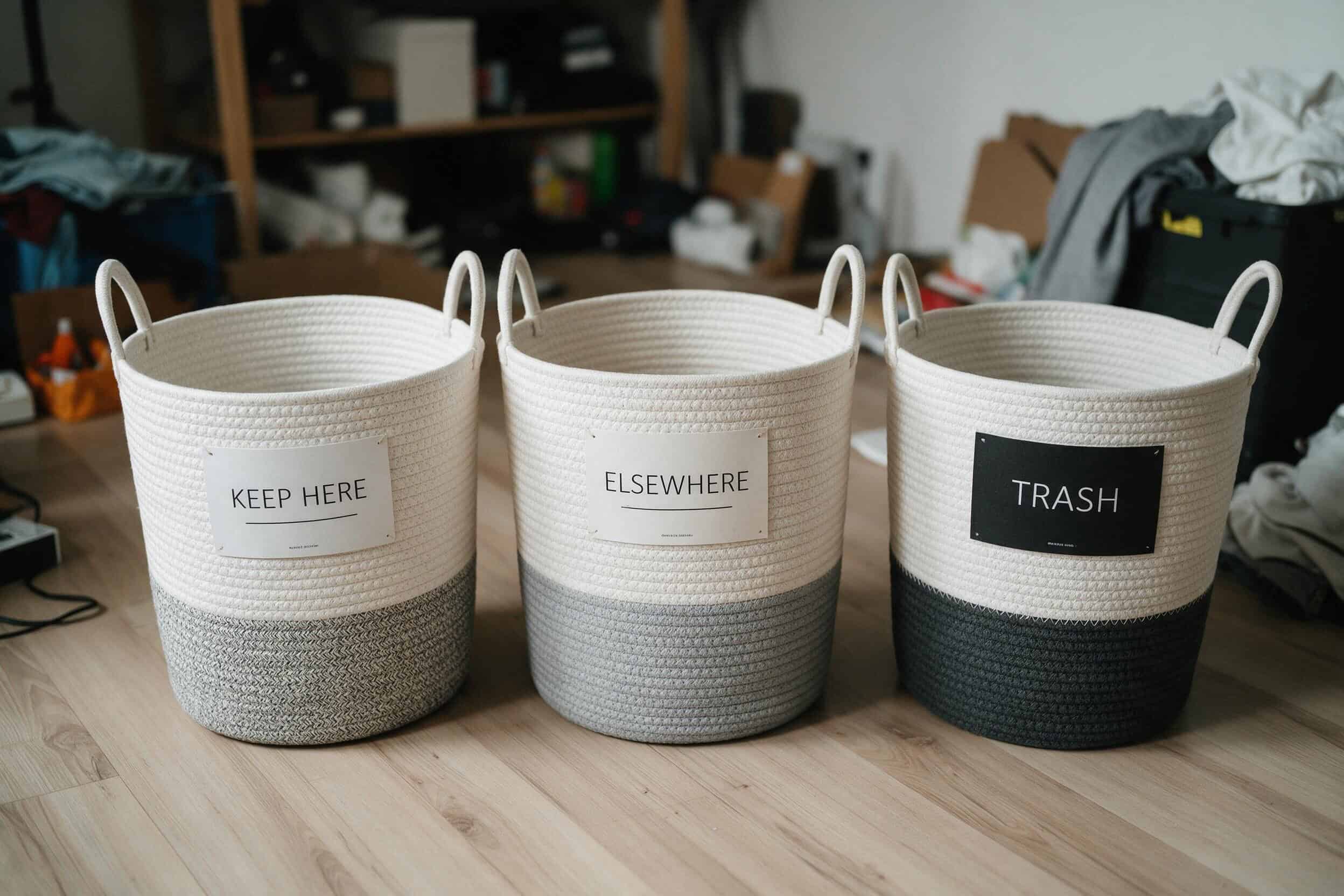
When every item in a messy room demands your attention at once, your brain experiences visual overload. Simplify your sorting down to three non-negotiable categories using real boxes or laundry baskets:
Bucket 1: Keep & Belongs Here (Items that have a clear home in this specific room).
Bucket 2: Belongs Elsewhere (Items that belong in another room—do NOT walk them over yet!).
Bucket 3: Trash / Donate (Items going away permanently).
By placing items directly into these three buckets, you reduce hundreds of confusing choices down to three instant decisions. Crucially, leave Bucket 2 in the room until you are completely done so you don’t get distracted walking back and forth between rooms.
Strategy 2: Practice “Micro-Sprints” with a Visual Timer
Long, unstructured blocks of time are the enemy of ADHD initiation. The thought of “cleaning the kitchen” feels infinite, so your brain refuses to start.
Set a visual timer (like a Time Timer or a 15-minute phone alarm) and challenge yourself to a micro-sprint. Tell yourself: “I am only cleaning for 15 minutes. When the timer rings, I am allowed to stop, no matter what.”
Limiting the time removes the mental dread of an endless chore. More often than not, once you overcome the initial hurdle of task initiation, your momentum will push you to keep going naturally.
Strategy 3: Establish “Dopamine Anchor Points”
Trying to keep an entire house immaculate at all times is unrealistic and exhausting. Instead, focus on creating one or two “Dopamine Anchor Points” in your home.
An Anchor Point is a small, manageable surface that you keep 100% clean—such as your bedside nightstand, your desk surface, or a single kitchen counter corner. When your brain feels chaotic, looking at your clean anchor point provides an instant visual sense of calm and control.
Strategy 4: Adopt Open & Clear Storage Solutions

Since hidden storage leads to forgotten items and duplicate purchases, redesign your organization to be visually accessible:
Use transparent plastic bins instead of solid, dark boxes.
Choose open basket cubbies over closed drawers for daily items.
Label containers with bold text or small visual icons.
When your brain can instantly see where items belong without opening three doors, the friction of putting things away drops significantly.
Strategy 5: Use “Body Doubling” or Upbeat Audio
Boring tasks offer zero natural dopamine, making physical cleaning feel almost physically painful. You can inject artificial stimulation into the process using sensory pairing:
Put on a high-energy playlist, an engaging podcast, or an audiobook.
Try “body doubling” by jumping on a FaceTime call with a friend or playing a “Clean With Me” video on YouTube in the background.
Having secondary background stimulation occupies the under-stimulated parts of your brain, allowing your hands to stay focused on organizing without feeling bored.
Take the Next Step: Free Room-by-Room Checklist
Decluttering doesn’t have to rely on guesswork or memory. Having a visual, step-by-step roadmap keeps your brain anchored when executive dysfunction tries to take over.
We created a printer-friendly ADHD Room-by-Room Declutter Checklist designed specifically for neurodivergent adults. It breaks down every room into bite-sized 10-minute tasks so you can check off boxes and celebrate quick dopamine wins!

[Download the free Room-by-Room Declutter Checklist (US Letter & A4) here]
Ready to Master Your Focus & Daily Routines?
While a simple checklist helps you clear physical spaces today, long-term calm comes from mastering your focus, energy, and daily systems across your entire life.
If you are ready to overcome overwhelm, stop paralysis, and build daily habits that work with your neurodivergent brain, take the next step with our complete guidebook:
“Master Your Focus & Overcome ADHD Overwhelm for Good”
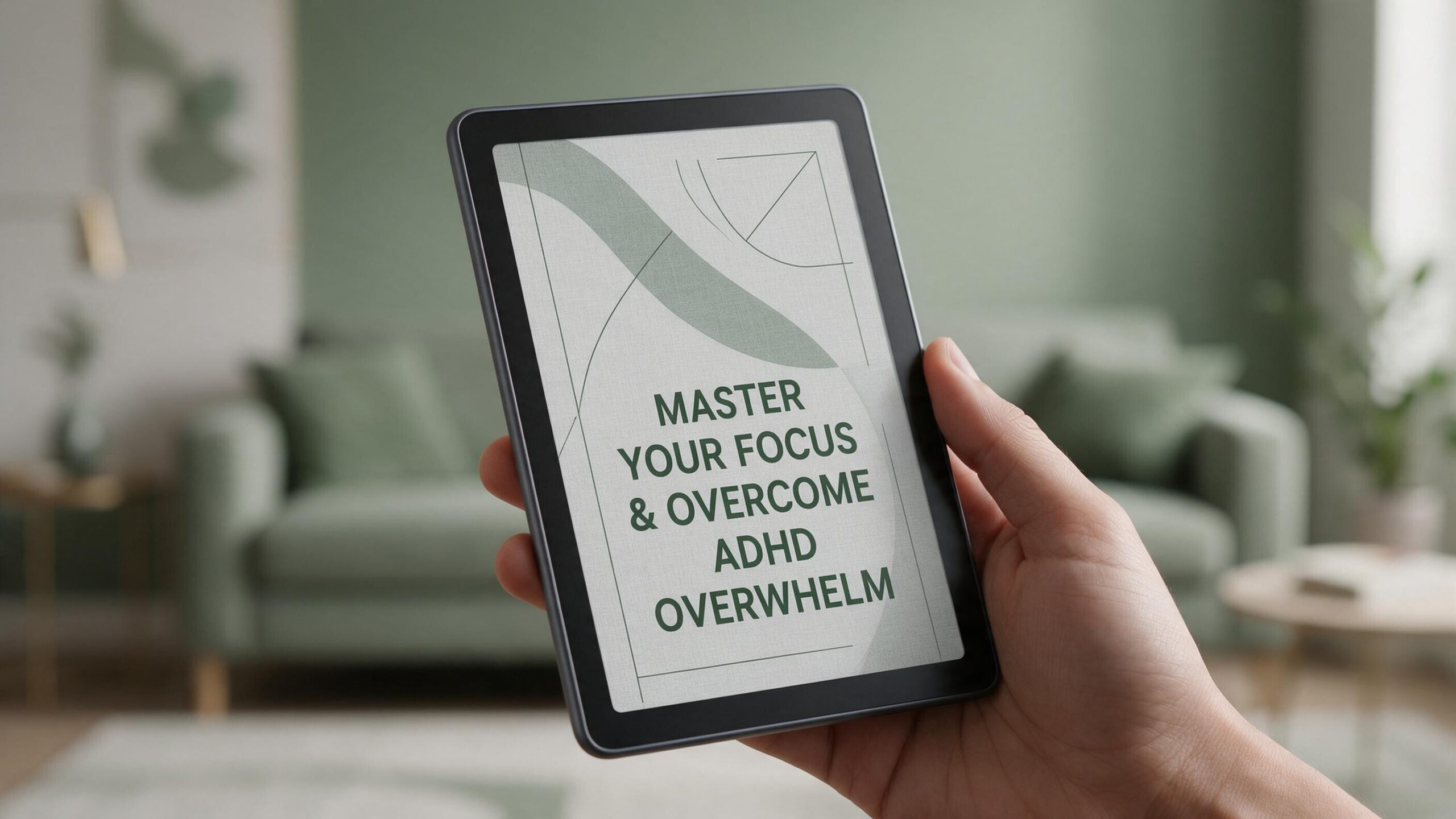
Inside this practical digital manual, you will discover:
Executive Function Blueprint: How to break free from task paralysis and chronic procrastination.
Low-Friction Home Systems: Step-by-step frameworks to keep your living space organized with minimal effort.
Dopamine & Energy Management: How to structure your workday and home life to prevent ADHD burnout.
Shame-Free Productivity: Sustainable habits designed for adults balancing work, family, and neurodivergence.
Transform your environment and reclaim your peace of mind today.
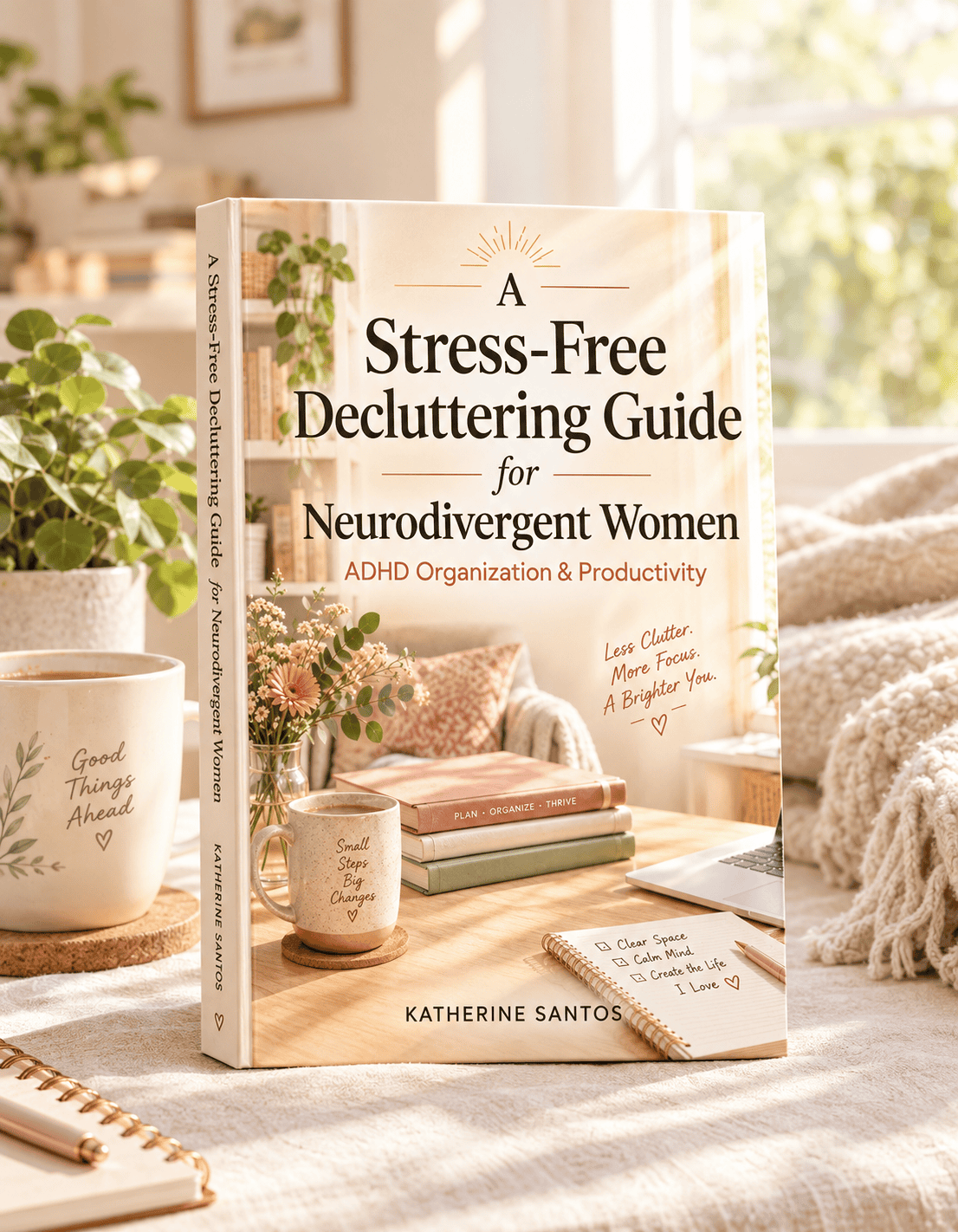
[Get the full guide on Google Play Books]
