
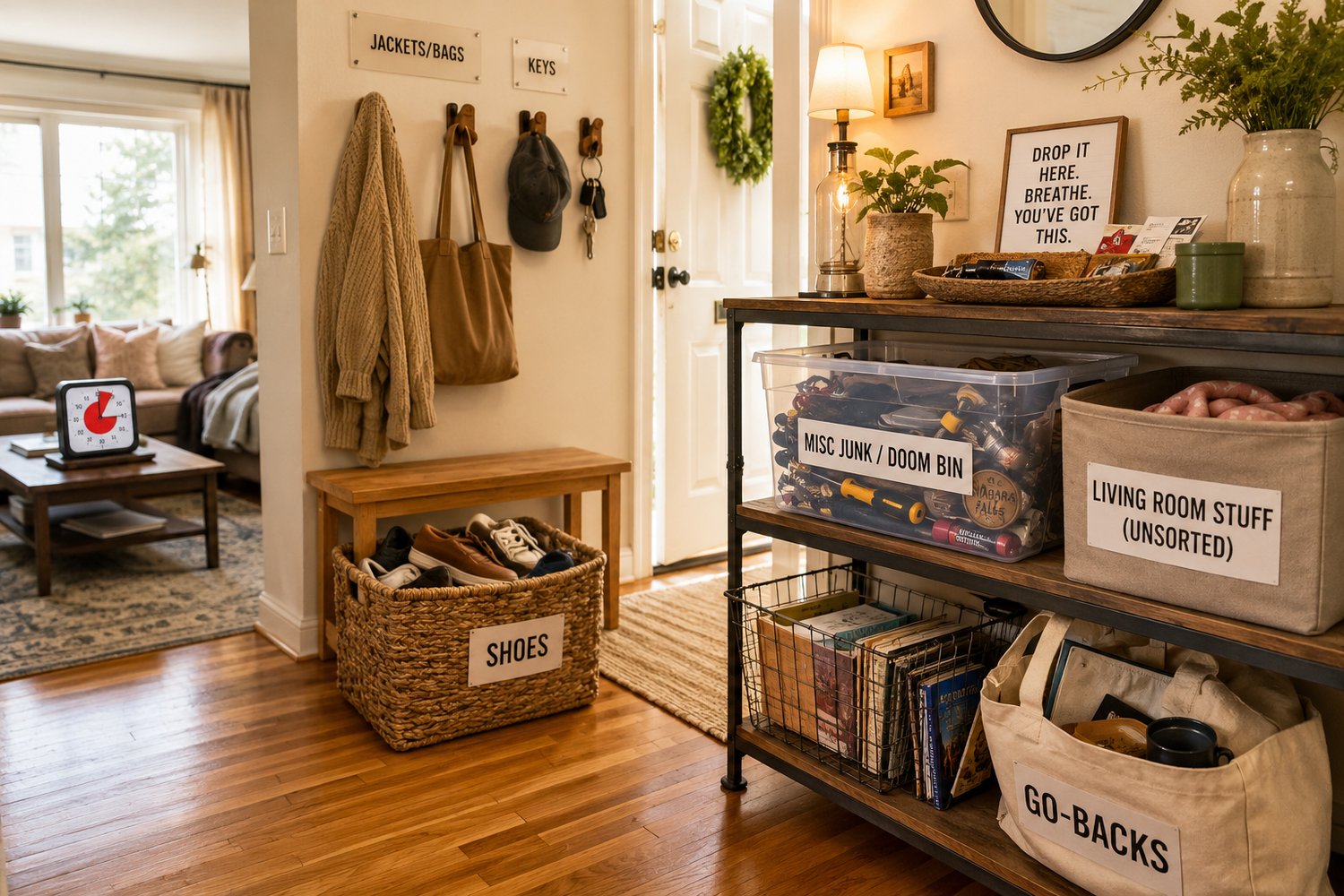
If you’re reading this while staring at a laundry pile that’s been sitting on “The Chair” for three weeks… take a breath. You are so safe here.
For years, I thought my messy apartment was a moral failing. I bought the pretty matching linen bins. I labeled little tiny sub-categories with a label maker. And within 48 hours? Everything exploded. I felt so ashamed. Why couldn’t I just put my stuff away like a normal adult?
Why Standard Organization Fails the Neurodivergent Mind
Here is the truth I wish someone had grabbed me by the shoulders and told me years ago: You are not lazy. You do not lack discipline. Your brain just processes the physical world completely differently than neurotypical people. Traditional organizing asks us to do ten steps just to put a pair of scissors away. Our brains simply go, No thanks, I’ll put it on the counter forever instead.
The Executive Dysfunction Trap: Too Many Steps & Mental Friction
Once I stopped fighting my brain and built systems around how I actually live, my home finally calmed down. Here are the simple, low-friction tricks that changed everything for me.
7 Low-Friction ADHD Organizing Hacks That Actually Work
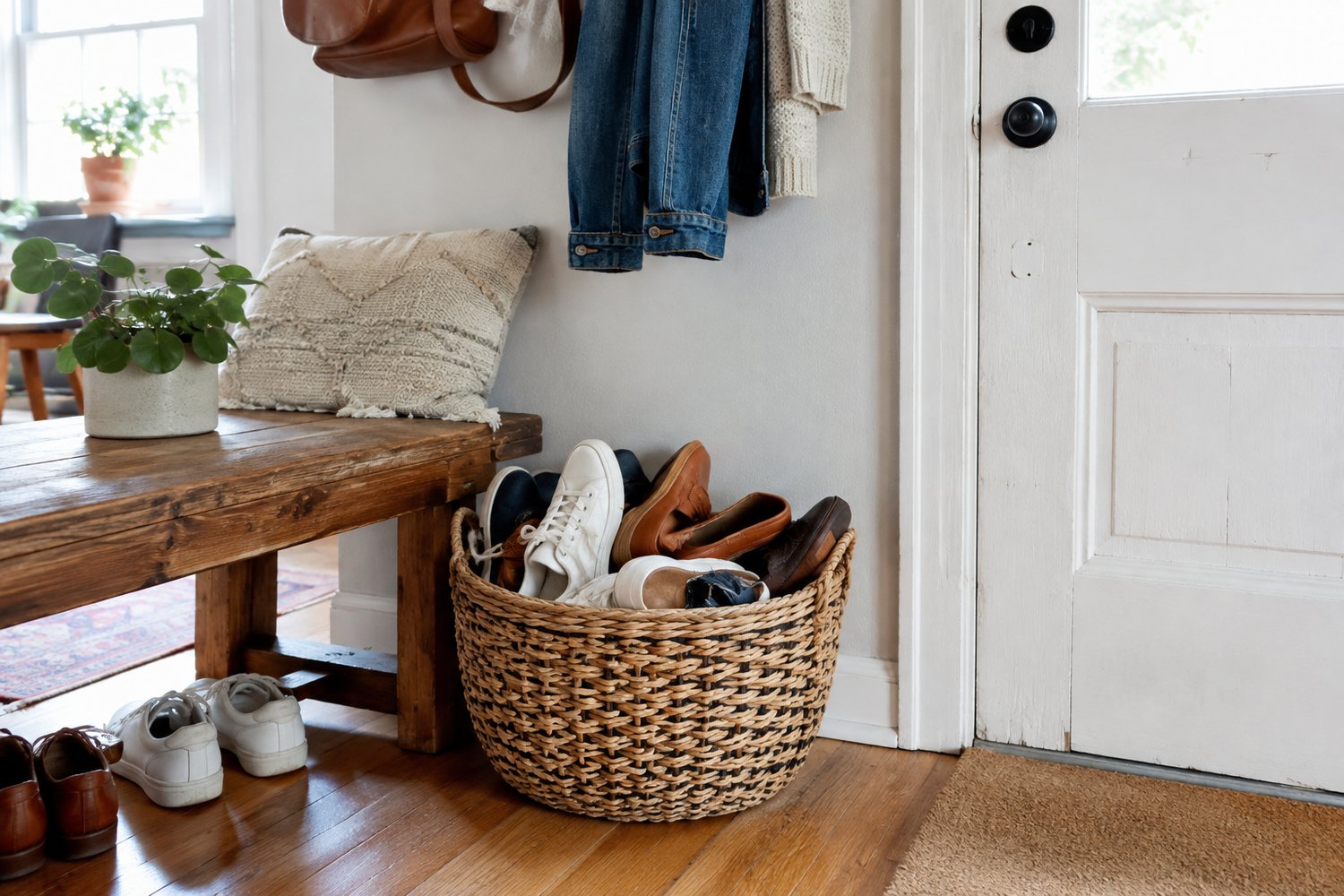
1. Follow the Clutter Trail: Clutter as a Functional Clue🕵️Instead of trying to force yourself to walk across the house to put something away, look at where clutter naturally lands. That spot isn’t a failure—it’s a clue. If your mail always ends up on the kitchen island, that’s where the mail sorter needs to live.
Why it helps: It removes the physical resistance. Work with your natural path of least resistance instead of fighting it every day.
How to do it:
- Walk around your home and spot your biggest “clutter piles.”
- Don’t clean them yet. Just observe what’s in them.
- Place a container or hook right at that exact spot.
Real-life example: I kept kicking my shoes off right inside the front door, creating a giant trip hazard. I tried putting them in the closet 10 feet away, but never did it. The fix? I put an open basket right next to the front door. Now I just kick my shoes directly into the basket. Done.
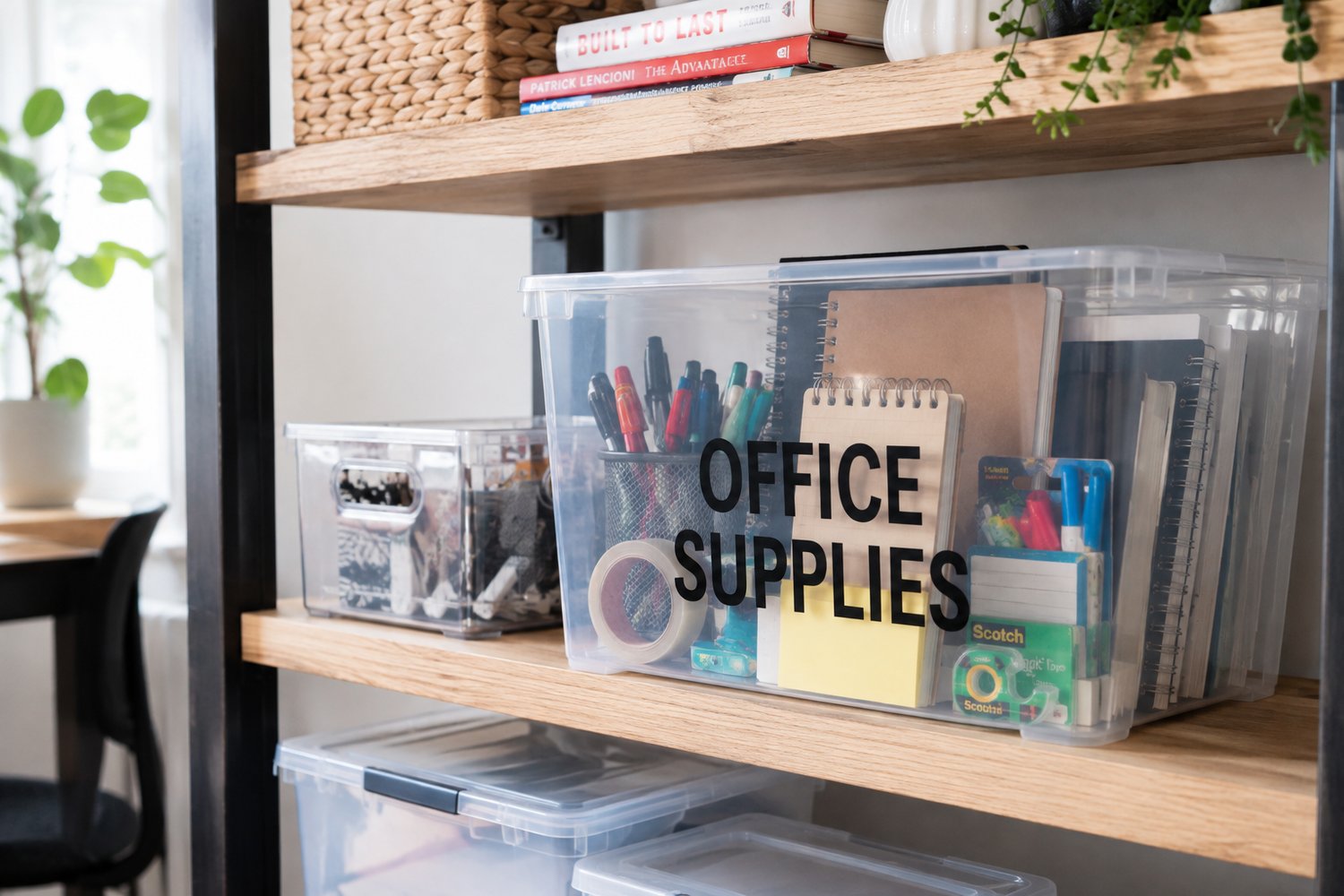
2. Macro-Organizing: Stop Micro-Sorting Your Belongings 📦Neurotypical organizing guides love to tell you to sort your cables by length, color, and device type. For an ADHD brain, that’s an immediate sentence to executive dysfunction. Macro organizing means making broad, messy categories where items can just be thrown in.
Why it helps: It takes zero mental energy to decide where something goes. Broad categories mean fast cleanups.
How to do it:
- Grab a large bin or basket.
- Pick one huge theme—like “Electronics,” “Hair Stuff,” or “Pet Gear.”
- Toss everything related into that single bin without sub-sorting.
Real-life example: Instead of separate drawers for highlighters, pens, tape, and sticky notes, I have one big plastic tub labeled “OFFICE SUPPLIES.” Everything gets dumped in together, and I can still find what I need in 5 seconds.
3. Eliminate Lids & Reduce Physical Barriers 🚫
Count how many physical steps it takes you to put something away. Open closet door, pull down box, lift lid, place item inside, put lid back on, close door. That’s five steps! We need to bring it down to ONE step.
Why it helps: If putting something away requires effort, we will delay it until the weekend, leading to overwhelming piles. Removing lids makes putting things away as effortless as dropping them on the floor.
How to do it:
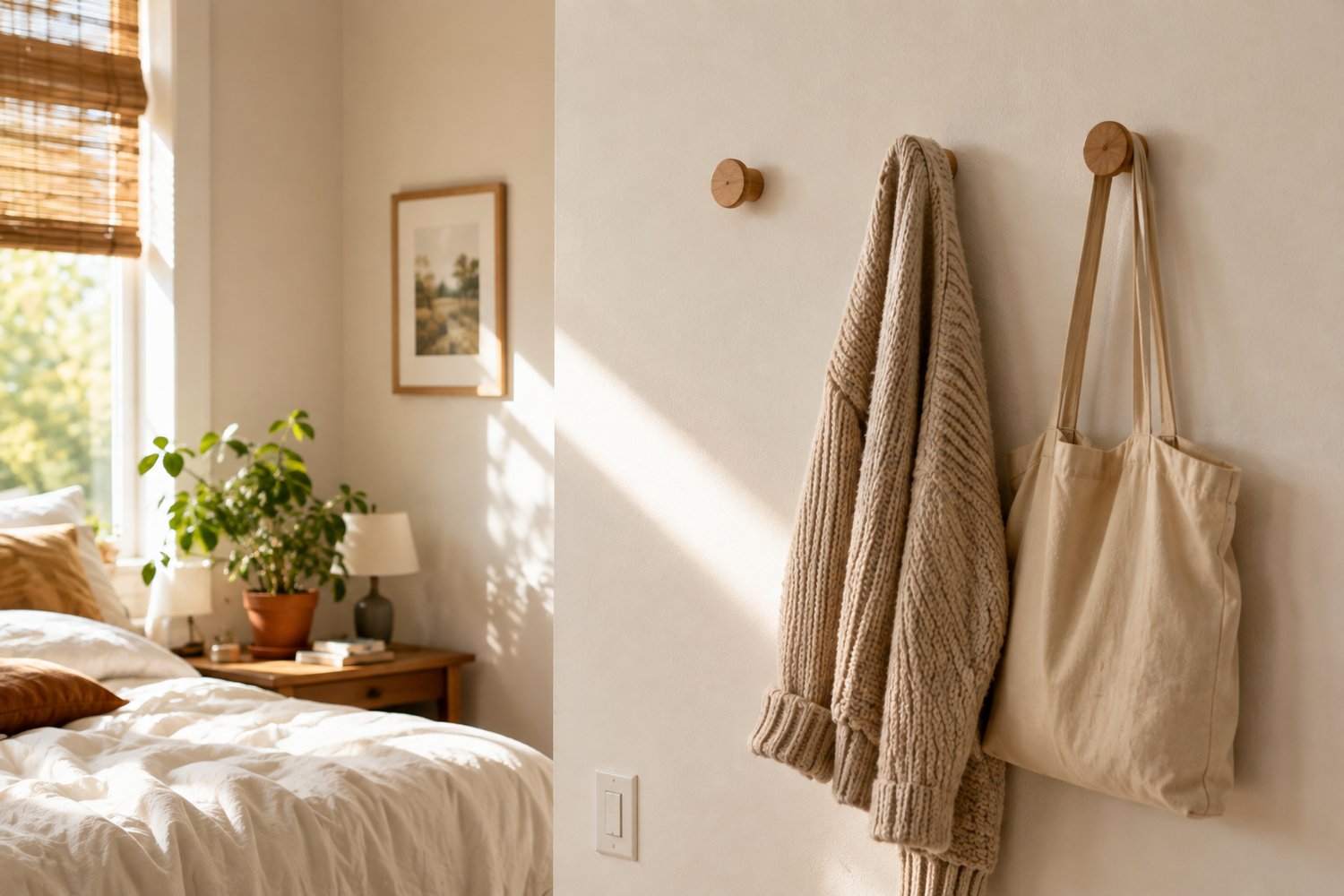
- Take the lids off your storage bins and toss them (or hide them under the bed).
- Install open wall hooks instead of buying clothes hangers.
- Use open-top fabric cubes on low shelves.
Real-life example: I used to hate hanging up my hoodies after work, so they lived on the floor. I installed five sturdy wall pegs right next to my bed. Now I can literally throw my hoodie at the peg and it hangs up instantly.
4. Strategic Point-of-Performance Drop Zones & Trash Cans 🗑️
If you have to walk to another room to throw away a wrapper or an empty box, you won’t do it. You’ll set it down on the nearest surface and promise to grab it later. (Spoiler: We never grab it later.)
Why it helps: Out of sight isn’t just out of mind—sometimes out of reach means out of luck. Having waste bins and drop bowls within arm’s reach stops trash and clutter before it spreads.
How to do it:
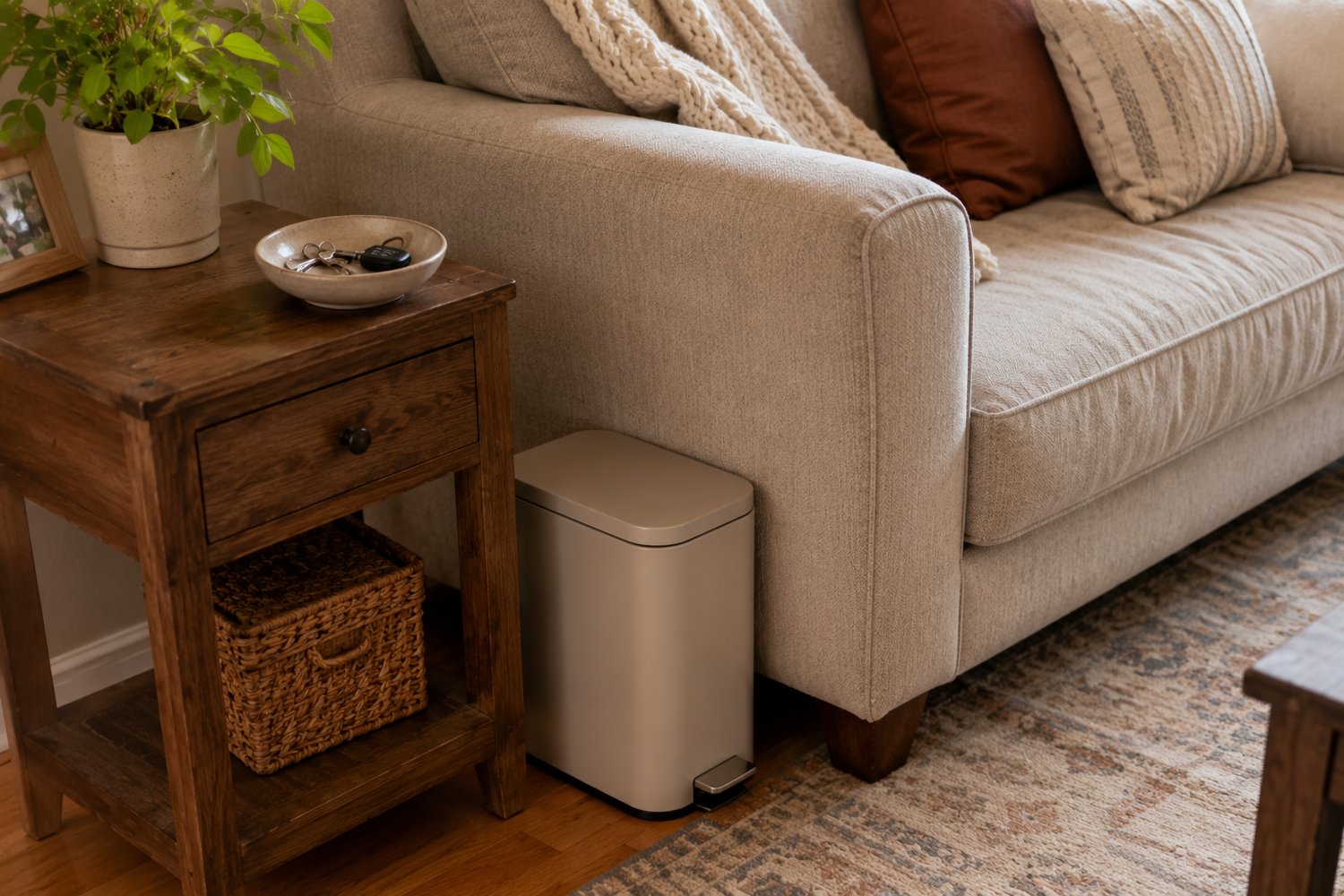
- Put a small trash can next to every single place you regularly sit or stand (couch, desk, bedside, entryway).
- Place a small dish or bowl on every major flat surface for keys, hair ties, and receipts.
- Don’t worry if it feels like “too many” bins—function wins over rules every time.
Real-life example: I put a small trash can right next to my bedside table. No more empty tea boxes or tissues accumulating on my nightstand while I watch TV at night.
5. Deploy “Go-Back Baskets” to Prevent Cleaning Pinball 🧺
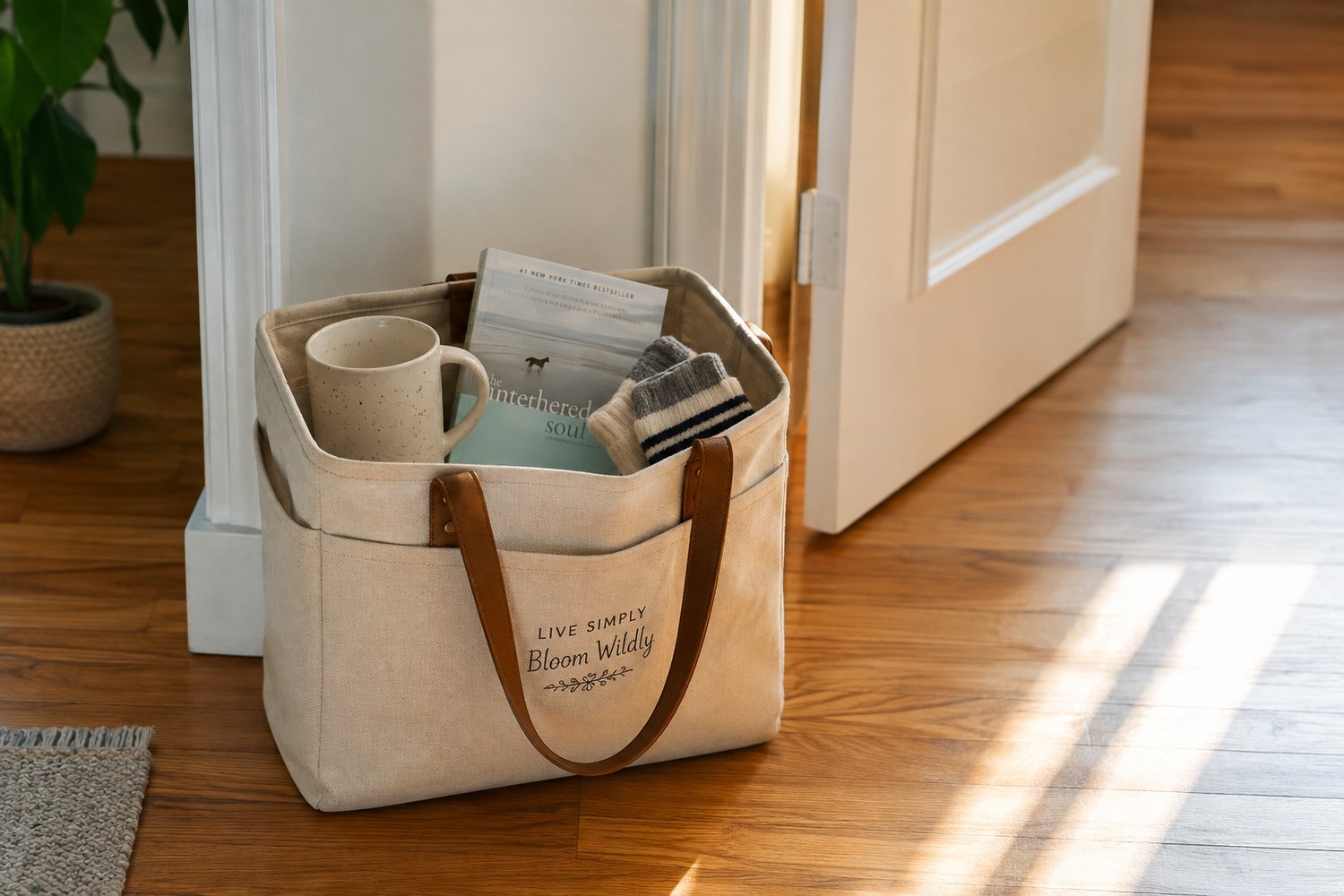
Ever walk into the kitchen to put away a mug, get distracted, find a pair of socks, walk to the bedroom, see a book, and suddenly you’re cleaning the bathroom 40 minutes later? Go-back baskets keep you anchored in one room.
Why it helps: It stops the constant “pinballing” from room to room that drains your energy and leaves half-finished tasks everywhere.
How to do it:
- Keep a basket near the doorway of the room you’re cleaning.
- When you find something that belongs in a different room, drop it in the basket.
- Do not leave the room until you’re done. Carry the basket to the next room only when finished.
Real-life example: When I tidied my living room, I used to get sidetracked taking dishes to the sink. Now, dishes, rogue laundry, and stray books all go into my “Go-Back Basket” until I’m totally done with the living room.
6. Embrace the “Doom Bin” or “Doom Box ADHD” Without the Shame 📦
We all have those random items that don’t fit into a clean category—a spare lightbulb, a strange screw, a souvenir coin, a half-used gift card. Forcing yourself to figure out a permanent home for every tiny object will stall your momentum completely.
Why it helps: It gives you a shame-free safety net. It keeps surfaces clear while honoring the fact that you don’t always have the bandwidth to decide on a permanent home right now.
How to do it:
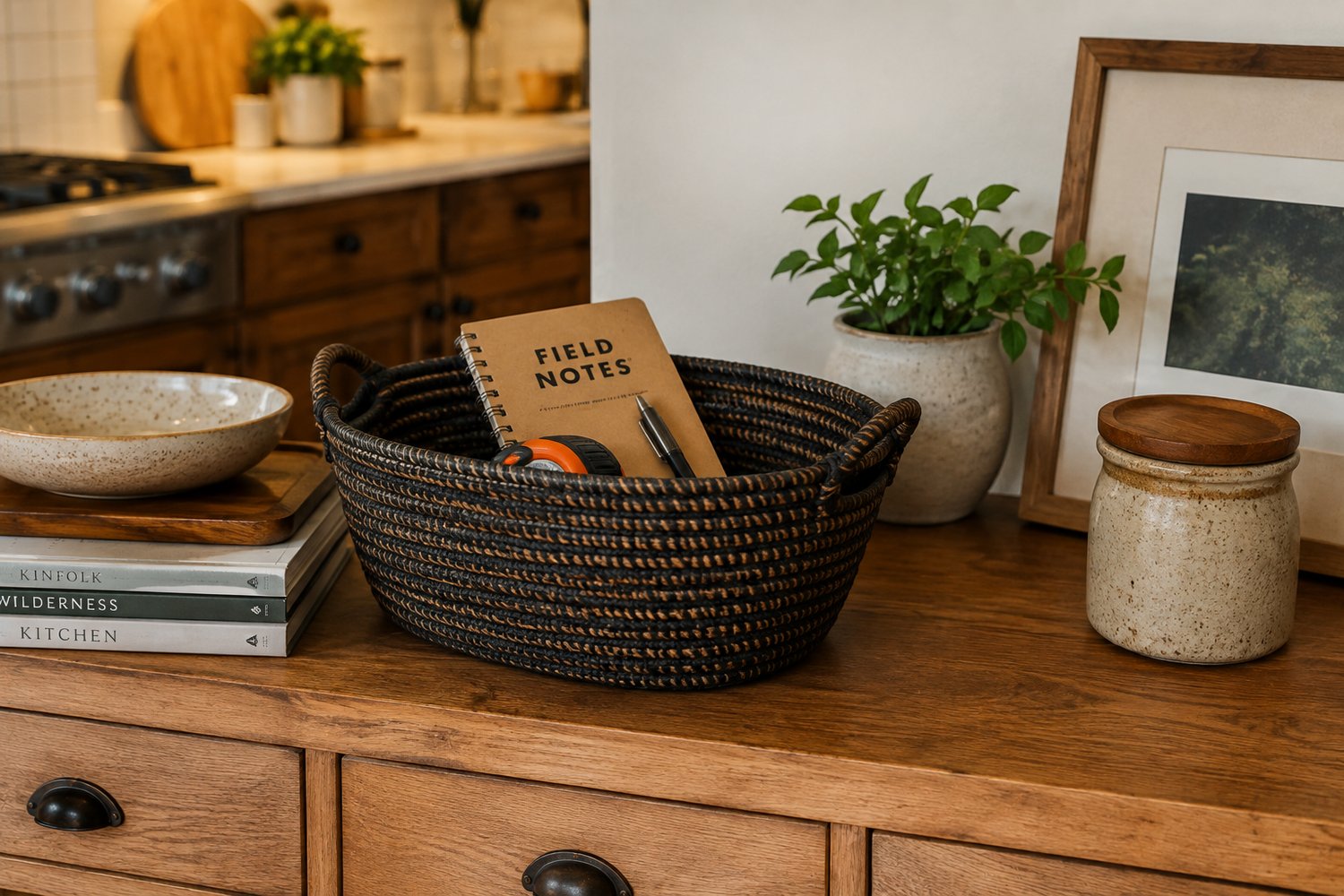
- Pick one nice-looking basket or drawer.
- Designate it officially as the “Doom Bin” or “Miscellaneous Basket.”
- When you’re clearing a surface and find something weird, toss it in.
- Schedule 10 minutes once a month to clear it out (or don’t, as long as it stays in the bin!).
Real-life example: Instead of leaving random junk on the kitchen counter because I didn’t know where it lived, it all goes into my decorative kitchen Doom Basket. The counter stays clear, and I always know where to search when I lose something odd.
7. Build a “Worst Day” System for Low-Energy Days 🌧️
Plan your organizing systems for the days you have 5% battery, not the days you’re hyperfocused on a Sunday afternoon cleaning spree.
Why it helps: When we are burnt out, high-effort systems collapse completely. A “worst day” system ensures that even on bad days, your home stays functional enough that you don’t wake up to total chaos.
How to do it:
- Ask yourself: “If I am completely exhausted tonight, what is the bare minimum I need?”
- Keep it to 1–2 non-negotiable rules (e.g., trash in the bin, dirty dishes in the sink, not on the coffee table).
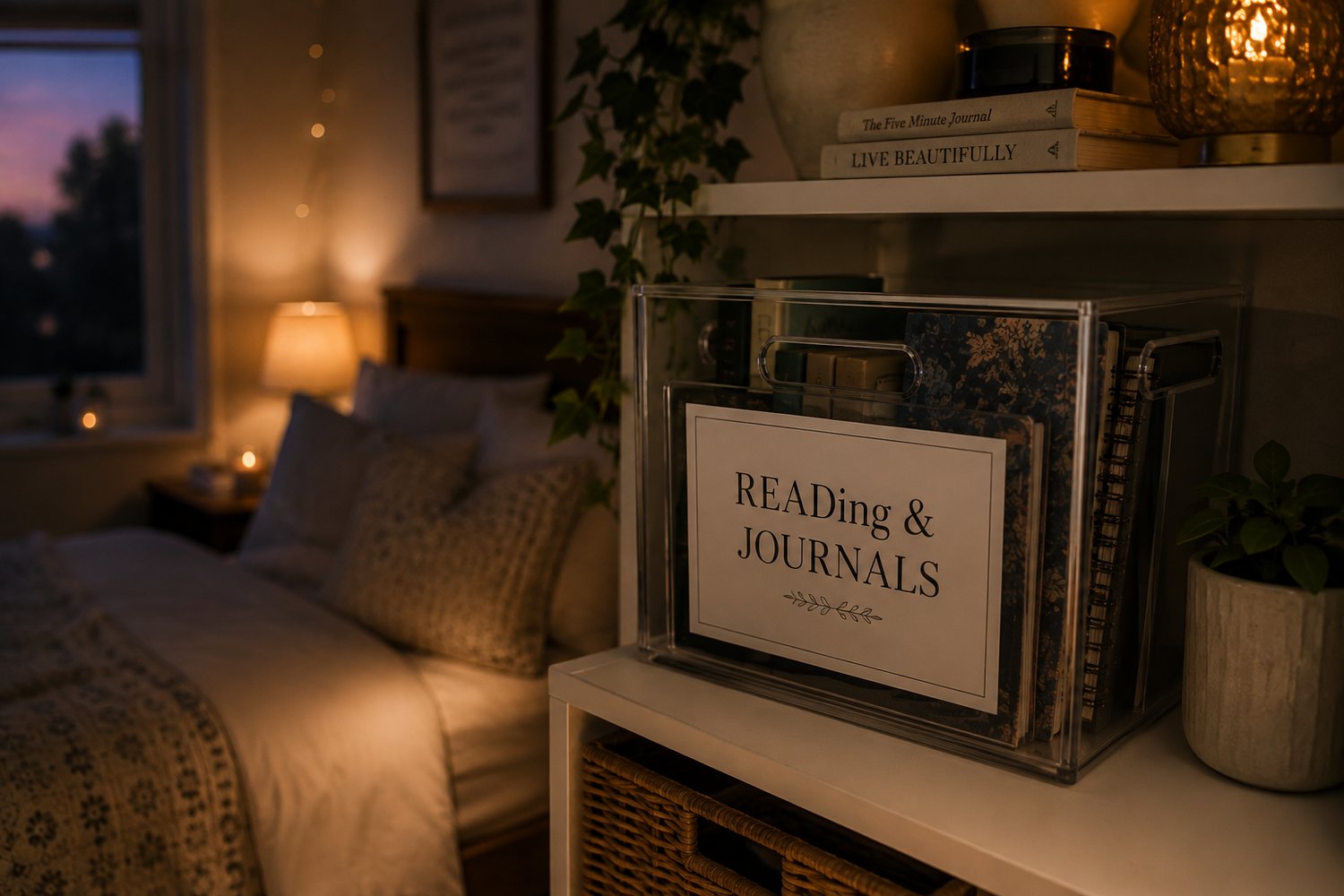
- Leave big clear labels on all your bins so your brain doesn’t have to work hard to remember where things go.
Real-life example: On my worst days, I don’t wash dishes, fold laundry, or sweep. My only “Worst Day Rule” is that all trash goes into a bin and my visual clutter is swept into my broad containers. That’s it. Forgiving yourself in advance changes everything.
How to Maintain an ADHD-Friendly Home Without Burning Out
When you start implementing these systems, remember: don’t try to fix your whole house in one weekend. That is the classic hyperfocus trap, and it almost always leads to a massive crash on Monday morning.
The 15-Minute Rule: Avoid the Weekend Hyperfocus Crash
Pick one single corner of your home this week. Maybe it’s the entryway floor, or the top of your nightstand. Set a timer for 15 minutes, put on your favorite podcast, add one open basket or hook, and then stop.
Progress with ADHD isn’t about perfection or having a home that looks like an Instagram feed. It’s about building a space that serves you, saves your precious energy, and lets you rest without feeling guilty.
You’ve Got This! 💛
Give yourself some grace today. You are learning a whole new way of living in a world that wasn’t built for your brain type, and that takes time. Celebrate every little victory—even if it’s just throwing one jacket onto a wall hook instead of the floor!
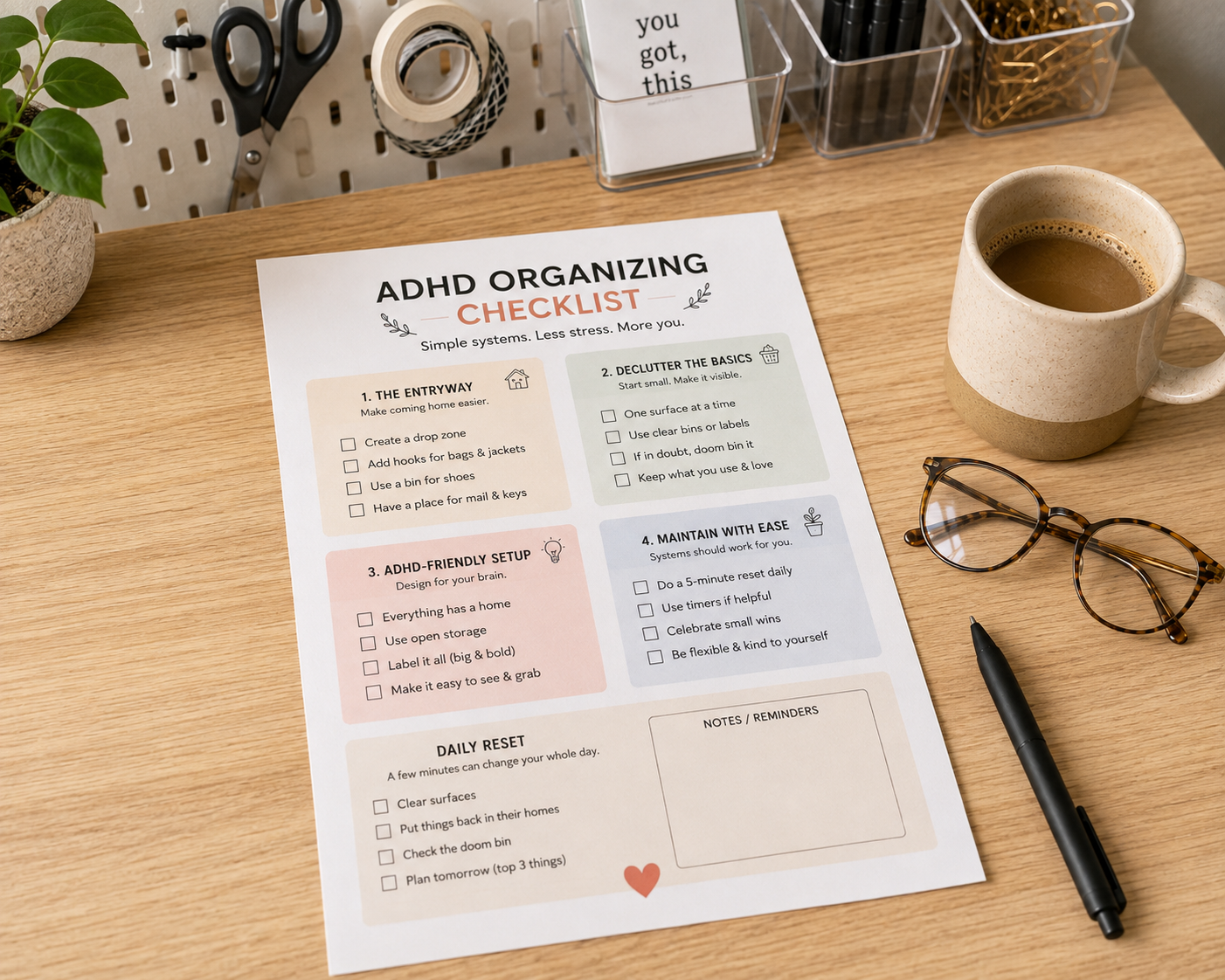
Download Your Free ADHD Visual Organizing Guide & Storage Checklist
I’ve put together a Free Visual Organizing Guide + Storage Solutions Checklist that shows you exactly what these systems look like in real homes, complete with non-judgmental product recommendations and layout ideas. You can download it for free at the end of this post / [Click Here].
